CEO Interviews

The Reynolds Consulting CEO Interviews CEOzine are intended to inspire all of us in the C-suite to challenge ourselves, our colleagues and associates to be the very best we can be. As John Maxwell said, “Leadership is being dissatisfied with the current reality and having the passion to make a difference.” We encourage you to forward this to others who you believe would benefit from reading it, as well as suggest CEOs whom you would like to see featured. Let us know what you think!


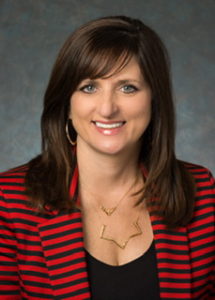
Tami Heim

Christian Leadership Alliance

Interview with Tami Heim, President/CEO, Christian Leadership Alliance of Christian Leadership Alliance

  • Tami, you have had an interesting leadership journey, from for profit to non-profit and from secular to non-secular. Please help us understand how you developed your leadership style?

    My leadership style is a blend of DNA, over 35 years of professional experiences, and the wisdom of value-based leaders who profoundly influenced my thinking, heart, and habits.

    The nod goes to my parents for recognizing and supporting my god-given strengths. They chose to see the best of themselves in me. My mother and father demonstrated a tireless work ethic, strength in crisis, and ownership for the outcomes in their lives. They modeled these behaviors, consistently reinforced them, and expected me to live them out in my own life.

    My professional path was marked with great mentors and people willing to invest their time, talent and resources in me. I’ve been honored to work for passionate people who also believed in my potential. Most of them could see a possibility in me that I never could on my own.

    I’m grateful for all the strong leaders I’ve served. When I review my leadership journey, I see the lifelong development action plan God ordered for me. Whether in secular or Christian organizations – each experience was a required season of learning and preparation for the one that was to follow.

{ read more if you are a member > }
{ if you are not a member, click here }

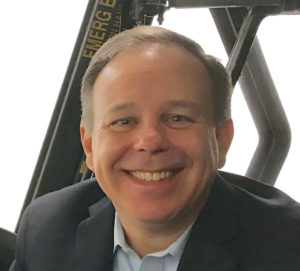
Dina Dwyer-Owens

The Dwyer Group

Interview with Dina Dwyer-Owens, CEO of The Dwyer Group

  • Please give us a brief overview of the Dwyer Group

    The Dwyer Group of companies was founded in 1981, by my late father, Don Dwyer. His first business was Rainbow International, a carpet dying and cleaning company. His vision was to have a collection of synergistic franchise businesses serving the same customer base, and to be able to use the same infrastructure, achieving economies of scale. Since 1981, we’ve owned and started up a lot of businesses. Today, we basically have seven (7) franchise brands: Rainbow International, which is now a full-service restoration and cleaning business, Mr. Rooter (plumbing and drain cleaning), Aire-Serv (heating and air conditioning), Mr. Electric, Mr. Appliance, Glass Doctor, and The Grounds Guys (lawn care and maintenance company), our newest brand.

    Today we have approximately 1600 franchisees, who collectively employ approximately 9,000 people. We’ve grown dramatically. Just before my father passed away, he’d taken the company public in 1993; we teased that going public killed him, because it took some of the control away. He’d laugh about that today, because he was a bit of a control freak—and happy to admit it! We have since gone private, and have a wonderful private equity partner, The TZP Group, out of New York.

read more if you are a member > }
if you are not a member, click here }


DANNY O’NEILL

The Roasterie Factory

Interview with Danny O’Neill, Bean Baron, President/Owner of The Roasterie Factory

  • Where did the idea to start THE ROASTERIE come from?

    I signed up to become a Foreign Exchange Student in High School. I wanted to go to either West Germany or Australia, and they sent me to Costa Rica. That summer, my friends were going coffee picking and asked me to go and I had this searing, awesome experience. I just loved being in the mountains. It doesn’t matter if I’m in Iowa, Ethiopia, or Kenya, or Brazil…the farmers are farmers are farmers and I love being with farmers. I loved the whole experience. So that was really the genesis of it, although I didn’t know it at the time.

    Later, after college I was working for a corporation headquartered in Seattle about the same time that Starbuck’s was taking off. It was really high quality, really special. We had them in our cafeteria. I was into coffee in a big way so being in Seattle, it was great…got all the experience. After a few transfers and some leadership changes, I realized I didn’t love what I was doing any more and starting to feel disillusioned. I wanted to take a sabbatical like John Sculley, who left Pepsi to run Apple, did. So that is what I did…I went out into the world.

    I started thinking about a coffee shop. My best friends thought, “You are way too high energy for a coffee shop. You’ll go crazy! Then what are you going to do?” My whole ONE idea was shot down! But I kept thinking about coffee. I just started going around the country lookin’ at coffee shops, looking at different coffee aspects, and made several trips back down to Costa Rica. One thing led to another, to another, to another. I started focusing on becoming a coffee roaster. I bought an old roaster on a whim and had it shipped to my home and just started roasting coffee in my basement and knocking on doors. That was really how it all began.

{ read more if you are a member > }
{
if you are not a member, click here }


PETE WILSON

Cross Point Church

Interview with Pete Wilson, Pastor of Cross Point Church

  • Crosspoint Church is a “high performance organization”. There is an energy that makes people want to understand what is going on here and it is growing so fast with an incredible outreach program. I am interested in learning how you lead to accomplish that result. Please start by telling us how you became a pastor?

    In college, I was a corporate communications major. My plan was to go into politics. By senior year, I started questioning what I really wanted to do. I knew I wanted to make a difference. The more I learned about politics, the more I wondered. Maybe there was a different way that I could have an impact on culture and on the world. At the time, I was volunteering at a local church, and I started thinking that I was made to do this. It was not like I ever heard God’s voice or I had some kind of angelic moment; it was more like I felt that I was gifted and wired to do this. This was what I wanted to do with my life.

{ read more if you are a member > }
{
if you are not a member, click here }


TIM CORBIN

Vanderbilt University Baseball

Interview with Tim Corbin, Head Coach of Vanderbilt University Baseball team

  • Today, we will be hearing from Coach Tim Corbin, head coach of Vanderbilt University Baseball team, who led the Commodores to the College World Series in 2011 for the first time ever in the school’s history. What we would like to learn today, Coach Corbin, is what it takes to get a team ready, committed and disciplined enough to achieve that kind of goal. Will you start off by helping us understand your background and what led you to Vanderbilt?

    I started coaching at Presbyterian College. It was 1987, after I finished my graduate work at Ohio State. At the time I was a dorm director at the College, 24 years old, and asked by the football coach who was also the Athletic Director, to start a baseball program. I started the program from scratch–there was no field, no players, and no format. I probably look back at that situation as being my learning environment.

    I don’t know if I can really point to any mentors that I had growing up in high school or even in college in terms of coaches. I had four different baseball coaches in college but wasn’t really attached to anyone that could lead me in the direction of coaching and teaching per say, but I always looked at other coaches from afar and tried to analyze them as best as I could. This program (Presbyterian) needed everything. I had to develop my own concepts and the experience taught me everything that is involved in a baseball program from buying a baseball, to putting grass down on the field, to inserting poles into the ground for a backstop, building my own screens, building my own machines and borrowing from everyone because we had no budget. We had no recruiting budget, we had no scholarships and my car was my mode of travel to recruit. I think back on that, Margaret, as being the proving ground for me as a coach and set my foundation for what I am doing today.

{ read more if you are a member > }
{
if you are not a member, click here }


KELLY SCANLON

Thinking Bigger magazine, 25 Under 25 awards, NAWBO

Interview with Kelly Scanlon, Owner and Publisher of Thinking Bigger magazine, Founder of 25 Under 25, National Chair of NAWBO, the National Association of Women Business Owners.

Kelly Scanlon, owner of Thinking Bigger magazine, founder of the 25 Under 25 honorary entrepreneurial group and National Chair of the National Association of Women Business Owners (NAWBO) has an interesting responsibility day to day because she has three very diverse organizations that she works with, all of which require a different leadership style. Kelly shares with us her leadership style relative to each of these three organizations and how it changes.

  • When did you first realized that you were developing a leadership style and who most influenced that leadership style?

    I never thought much about leadership style. I’ve always been very much a doer, very oriented on tasks and getting things done. But as my company grew I realized I had to rely on other people in order for it to grow. At times I didn’t allow that to happen. Interestingly, it was my growing involvement with NAWBO that caused me to move to a leadership style with my own company that is allowing it to grow. I was always very hands on and had to be involved in every decision and have my fingerprint on everything.

{ read more if you are a member > }
{
if you are not a member, click here }


KAY BARNES

Mayor of Kansas City, Missouri from 1997-2007

Interview with Kay Barnes, Mayor of Kansas City, Missouri from 1997-2007

  • Mayor, when did you first understand the importance of leadership?

    I’m not sure I can identify a specific moment. My cousin was Walter Cronkite. That was my maiden name. His father and my father were brothers. So, even though there was a difference in age between the two of us, I obviously grew up observing a member of the family being very engaged both nationally and internationally. So to whatever degree, that was an illustration of leadership. That was probably the individual and the circumstance that had the greatest impact on me early.

{ read more if you are a member > }
{
if you are not a member, click here }


TERRY DUNN

JE Dunn Construction

Interview with Terry Dunn, CEO of JE Dunn Construction

  • Please give us a very brief history of the company.

    Our business was founded in 1924 by my grandfather J E Dunn and started out as a small business, doing housing and general construction jobs. During WWII, my grandfather took on government contracts on which he had made some significant money; out of respect for the war effort and friends and family serving in the military he elected to give the savings on the job back to the federal government. He returned over hundreds of thousands of dollars…which would be a lot more than millions of dollars today. Consequently, he was acknowledged by the President of the United States. It was not the first time he had donated money as he believed strongly in supporting his community. As a result we have a firm tradition of giving back approximately 10% of our pre-tax earnings each year to ‘not for profits’ in markets that we serve.

{ read more if you are a member > }
{
if you are not a member, click here }


CORDIA HARRINGTON

Tennessee Bun Company

Interview with Cordia Harrington, President and CEO of Tennessee Bun Company

  • Tell me about your company; how long you’ve had it, why you started it and where you see it going in the next year or two.

    The Tennessee Bun Company started as an exclusive supplier to McDonalds; a bakery that I built. It was under construction in 1996 and opened in April 1997. It’s a very high speed bakery– a 1,000 buns a minute– and has since grown into a six line bakery with 3 plants. We plan to acquire another bakery this year and we’re adding about 35,000 square feet to the Nashville plant. It is a 9,000 per dozen biscuit line, which bakes 2,000 products a minute. This line will open in May 2011.

    [ read full article > ]


JIM WRIGHT

Tractor Supply

Interview with Jim Wright, Chairman and CEO of Tractor Supply

  • Tractor Supply has made tremendous progress over the last decade and transformed itself in terms of the customer target and growth. How have you done that, especially in the last few years amidst such a challenging retail economy?

    We’ve done very well since 2008 and continue to do so through the first three quarters of 2010. Margaret, the primary catalyst for us was as retailers, we have a tremendous amount of data. Early in 2008 we noticed our consumers’ behavior was changing. The average ticket began to come down and cash and debit became a more preferred tender type, as opposed to credit. So early in January of 2008, we “called” the fact that we were in a recession. Of course, we weren’t positive, but we saw the signs of a recession and determined that if we made that call and were wrong, then we would do well, and if we made that call and were right, we would be OK.

    [ read full article > ]


JOHN CERASUOLO

ADS Security

Interview with John Cerasuolo, President of ADS Security

  • John, tell us a little bit about your work background before you came to ADS.

    I started my career with nine years in the Navy and spent nine years in nuclear engineering. I enjoyed my time in the military, but left when I started my family, as I was spending a lot of time out at sea due to the travel requirements. I then spent two years at Michelin and followed that with 18 years at a telecommunications company before I joined ADS a little over two years ago.

    [ read full article > ]


FRED PRYOR

Fred Pryor Seminars/Career Track

Interview with Fred Pryor, Founder at Fred Pryor Seminars/Career Track

  • What was the catalyst for you to found Fred Seminars in 1970? How did it get started?

    I was doing some seminars on a very local basis to a number of different businesses, and universities. One night, when I was just totally fatigued, I kicked back and it just popped into my mind that somebody should be doing this on a national basis. So I tried it and it was the right time, and right place; that’s how we began.

    [ read full article > ]


DAN CATHY

Chick-fil-A

Interview with Dan T. Cathy, President and Chief Operating Officer of Chick-fil-A, Inc.

  • What is it like to have a father for a leadership role model?

    It is certainly a unique relationship; there are not many businesses that are able to survive a transition from one generation to the next. Dad is 89 and still very active in the business. The generational transition is purposefully slow. We now have three generations involved in the business, including my brother, Bubba, and sister, Trudy, and my sons Andrew, 32 and Ross 30. Bubba’s oldest son, Mark, and Trudy’s oldest son, John, are also already in the business. By working alongside, beside and in front of family members, we share close proximity, providing us with congruence of values, character, hearts and passions. It is a pretty special chemistry. Since it has been a successful model in our family with the second generation, we extended it to the third generation.

    [ read full article > ]


RICK FROST

LOUISIANA-PACIFIC CORPORATION

Interview with Rick Frost, Chief Operating Officer of Louisiana-Pacific Corporation.

  • Leading a large construction company in a recessionary period must be tough. How are things going?

    The company started in 1973 selling building construction materials (of which 25% go into homes); needless to say, we have been up and down. We anticipated a downturn, but not the depth of the economic crisis. Revenue has been down these last few years, but we are a large player in this global industry and we expect to recover. Our OSB (oriented strand board) is shipped all over the world—including Asia and South America (and we have the largest share of that market). We are also the key producer in the siding business and are #3 in the world for engineered wood products.

    [ read full article > ]


MARK EMKES

BRIDGESTONE AMERICAS

Interview with Mark Emkes, recently retired CEO of Bridgestone Americas.

  • How did you get your start in this industry?

    I started off changing tires in a store in Houston for 3 months, then got promoted to service manager, and three months later I was assistant store manager and eventually store manager. After 6 months at headquarters (to learn the business), I was sent to Dubai as an export sales rep. The next 21 years I spent outside the US, including stints running Mexico, then Brazil, Latin America, and in 2004, named Chairman and CEO of Bridgestone Americas, which is the largest subsidiary of Bridgestone Corporation in Tokyo.

    [ read full article > ]


PETER DESILVA

UMB BANK

Interview with Peter deSilva, President and Chief Operating Officer of UMB Bank.

  • As President and COO of UMB Bank, how would you describe your approach to leadership?

    When I joined the bank in January of 2004, it was clear that the culture of the 97 year old financial institution was well established, and it was a culture of enduring success. UMB had a history of integrity, customer focus, excellent service, supported by the best people, and high standards of performance. To go to the next level, we had to contemporize the culture, not change it.

    [ read full article > ]


MAXINE CLARK

BUILD-A-BEAR WORKSHOP®

Interview with Maxine Clark, founder and chief executive bear Build-A-Bear Workshop®.

  • Describe your growth “ride” since your inception in 1997, and what factors you most actively managed to achieve it?

    The concept for Build-A-Bear Workshop® was born from the desire to reinvent retailing for the 21st century. The idea was the result of years of retail experience and a desire to bring the fun back to shopping- the way I remembered it when I was a child. The ‘light bulb’ went off for me when I was shopping with my friend Katie, who at the time was 10-years-old. It was during the height of the Beanie Baby craze and Katie was frustrated at not being able to find the one she wanted. Katie suggested making them. She meant to start a craft project, but I heard something else.

    [ read full article > ]


JOE SCARLETT

SCARLETT LEADERSHIP INSTITUTE

Interview with Joe Scarlett, Founder of Belmont University’s Scarlett Leadership Institute and retired CEO of Tractor Supply Company, a retail chain based in Nashville, TN.

  • What created your passion for leadership?

    When you work in retail and are in charge of multiple locations running 15 hour days, you have to work smart. It just made sense to find leaders who are great people and get the job done. Strong leadership was a necessity, not an option.

  • How do you define leadership?

    Leadership involves empathy, respect (which includes empowering, not micromanaging), recognizing people as individuals and team members, and celebrating performance. Those behaviors incent more great people to continue to raise the high bar, and you have a repeating cycle with increasingly higher payout. There is absolutely no room for ego in leadership. Eventually it will isolate you.

    [ read full article > ]


WILLIAM TAYLOR

FAST COMPANY MAGAZINE

Interview with Bill Taylor, co-founder of Fast Company magazine and author of Mavericks at Work, Why the Most Original Minds in Business Win.

  • What led you to the development of Fast Company magazine in 1994? What were you hoping the magazine would accomplish?

    My partner, Alan Webber, and I felt that there was a point of view missing; not about where business was going, but where it could be going. We wanted to showcase business at its best, encouraging both entrepreneurs and executives to aim higher and think bigger. It was an opportunity for us to create a soapbox of sorts, get people to affiliate with the philosophy and start a movement to achieve a smarter approach to business. We chose to feature the top 5-10%—the best of the best—the businesses that were creating economic value by being true to their own unique set of truths. We hoped it would establish a bar for people to shoot for. The high road is the right road—we believe that value-driven businesses are successful businesses.

    [ read full article > ]

Print Friendly

by Margaret Reynolds on July 1, 2010 · 0 comments

in